原题,下面是题目描述:
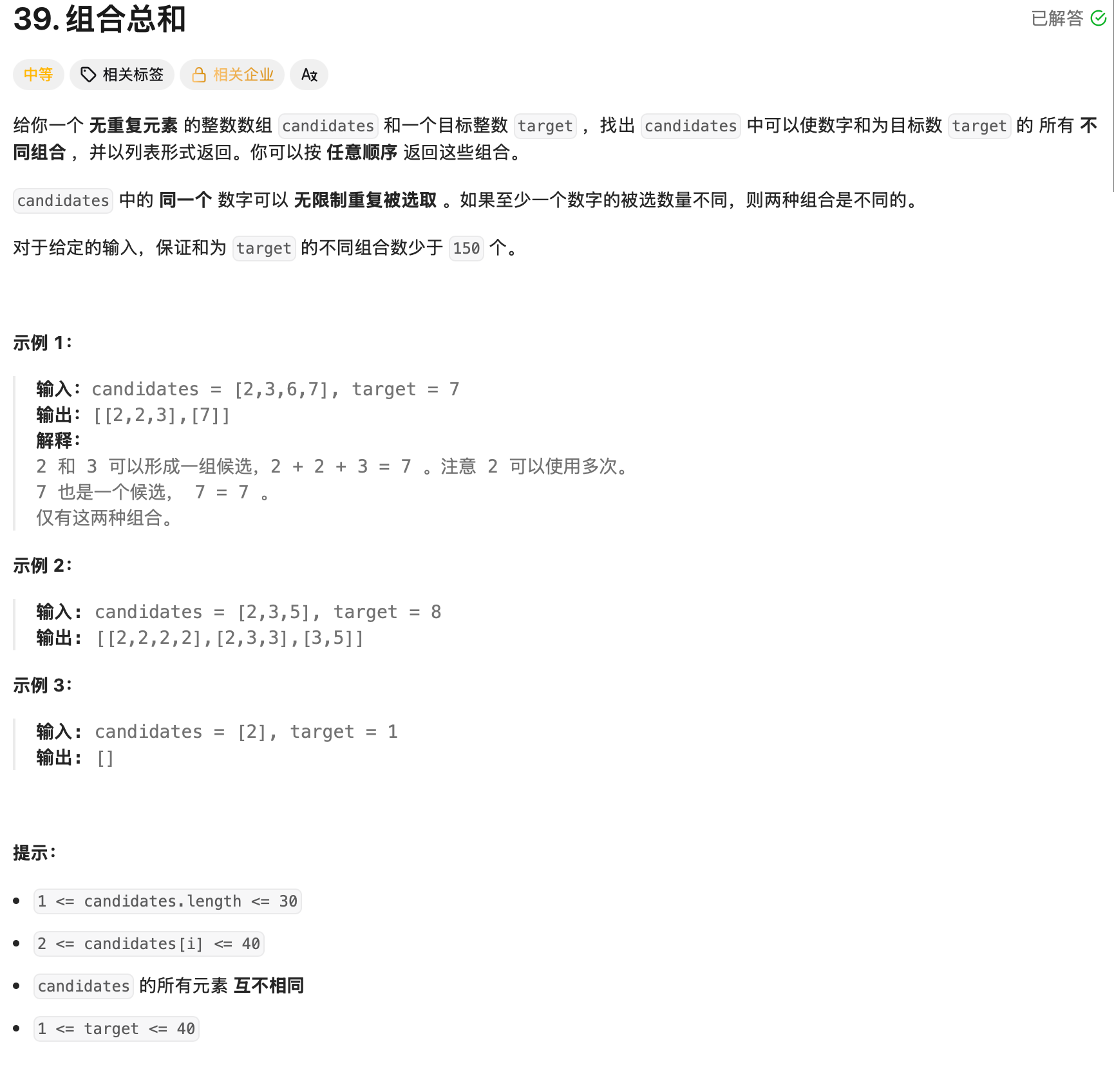
我称之为两数之和plus plus版,一个数字可以重复使用,最近都在做这种递归的题目,这题其实也比较显然的递归。我们遍历列表,找到一个小于当前target的数字就进入下一次递归(大于就直接进入下一次循环了,等于更不必说,直接加入我们的结果数组中),每次加入数字时将当前数字减去。但是这样会有很多的重复项,比如题目中的例子:
[2,3,6,7],target=7。 如果我们直接将数组传入下一个递归中,那么很显然,遍历到2时会得到2,2,3这个序列,但是当我们遍历到3时,又会得到3,2,2这个序列,题目中并没说顺序不一样也行,那显然这个是一个重复序列,需要去掉。
那如何去掉?还是上面的例子,我们遍历到 2 的时候,放入下一次递归,我们一定能够遍历到后面的 3 ,所以我们其实已经将 2,2,3 这个序列加入到结果数组里了,在遍历到 3 时根本无需考虑前面的数字。OK,思路就有了,我们直接传递一个开始下标到下一次递归,让其不要遍历之前的数字即可,这样就去掉了重复值。
代码一
我们写下第一版代码:
class Solution {

    public List<List<Integer>> combinationSum(int[] candidates, int target) {
        ArrayList<List<Integer>> combinationSumRes = new ArrayList<>();

        int len = candidates.length;

        for (int i = 0; i < len; i++) {
            ArrayList<Integer> list = new ArrayList<>();
            if (candidates[i] == target) {
                list.add(candidates[i]);
                combinationSumRes.add(list);
                continue;
            }

            if (candidates[i] > target) {
                continue;
            }
            int[] t = new int[len - i];
            System.arraycopy(candidates, i, t, 0, len - i);
            list.add(candidates[i]);
            ArrayList<List<Integer>> lists = combinationSum2(t, target - candidates[i], list);
            combinationSumRes.addAll(lists);
        }

        return combinationSumRes;
    }

    public ArrayList<List<Integer>> combinationSum2(int[] candidates, int target, List<Integer> l) {

        if (target < 0) {
            return new ArrayList<>();
        }
        int len = candidates.length;
        ArrayList<List<Integer>> res = new ArrayList<>();

        for (int i = 0; i < len; i++) {
            ArrayList<Integer> list = new ArrayList<>(l);
            if (candidates[i] > target) {
                continue;
            }
            if (candidates[i] == target) {
                list.add(candidates[i]);
                res.add(list);
                continue;
            }
            int[] t = new int[len - i];
            System.arraycopy(candidates, i, t, 0, len - i);
            list.add(candidates[i]);
            ArrayList<List<Integer>> lists = combinationSum2(t, target - candidates[i], list);

            res.addAll(lists);
        }
        return res;
    }

}
代码和前面的思路非常吻合,提交后一次通过,但是速度并不理想,那我们需要接着优化。在这种递归和循环的代码中,最耗时的代码往往是创建对象。我们递归里创建了两个对象,一个是res结果数组,一个是list,路径上的数字的数组。list数组是无法优化掉的,因为题目需要我们提供具体的数字,所以必须要将路径记录下来。那res可以优化吗?显然可以,这里 res 数组在递归中作用很简单,将吻合的路径加入,然后返回给调用。我们其实可以直接设置一个类变量,符合要求直接加入其中即可,这样还可以省掉返回值。
代码二
我们就有了优化后的代码:
class Solution {
    ArrayList<List<Integer>> combinationSumRes = new ArrayList<>();
    public List<List<Integer>> combinationSum(int[] candidates, int target) {
        int len = candidates.length;

        for (int i = 0; i < len; i++) {
            ArrayList<Integer> list = new ArrayList<>();
            if (candidates[i] == target) {
                list.add(candidates[i]);
                combinationSumRes.add(list);
                continue;
            }

            if (candidates[i] > target) {
                continue;
            }

            list.add(candidates[i]);
            combinationSum2(candidates,i, target - candidates[i], list);
        }

        return combinationSumRes;
    }

    public void combinationSum2(int[] candidates, int start, int target, List<Integer> l) {

        if (target < 0) {
            return;
        }

        int len = candidates.length;

        for (int i = start; i < len; i++) {
            if (candidates[i] > target) {
                continue;
            }
            ArrayList<Integer> list = new ArrayList<>(l);
            if (candidates[i] == target) {
                list.add(candidates[i]);
                combinationSumRes.add(list);
                continue;
            }

            list.add(candidates[i]);
            combinationSum2(candidates,i, target - candidates[i], list);

        }
    }
}
优化后的代码提交一次过,速度大幅提升,打败百分之99。我们可以试着分析一下时间复杂度。这里情况有点复杂,我们分析最差时间复杂度,我们最差情况,会递归数组长度,我们设为 n ,每个递归内最差循环数组长度。
那这里最差时间复杂度应该为 O( n! )。